




Growth of Big Data and IoT Integration
Big Data and Internet of Things (IoT) integration is transforming how data is collected, analyzed, and used for decision-making in modern systems. This integration enables real-time insights, automation, and intelligent services across industries.
What is Big Data in IoT?
Big Data in IoT refers to the massive volume of structured and unstructured data generated by connected devices such as sensors, machines, and smart systems. The list of key aspects of Big Data in IoT is given below:
1. Data Volume
Big Data in IoT involves extremely large datasets generated continuously from billions of connected devices across the globe.
- Massive Data Generation: IoT devices like sensors and cameras produce huge amounts of data every second
- Scalability Requirement: Systems must handle growing data efficiently without performance issues
2. Data Velocity
Data velocity describes the speed at which IoT devices generate and transmit data in real-time.
- Real-Time Streaming: Devices continuously send data for immediate processing
- Fast Decision-Making: Businesses can respond instantly to changing conditions
3. Data Variety
IoT data comes in different formats, making it complex to manage and analyze.
- Structured Data: Databases, logs, and tables
- Unstructured Data: Images, videos, sensor outputs, and audio
4. Data Veracity
Data veracity refers to the quality and reliability of IoT-generated data.
- Data Accuracy: Ensuring correct and meaningful data collection
- Noise Reduction: Filtering out irrelevant or incorrect data
5. Data Value
The ultimate goal of Big Data in IoT is to extract meaningful insights and value from raw data.
- Business Insights: Helps improve strategies and operations
- Predictive Analytics: Enables forecasting and trend analysis
Role of IoT in Generating Big Data
IoT devices act as the primary source of Big Data by continuously collecting and transmitting information. The list of IoT roles in Big Data generation is given below:
1. Sensor-Based Data Collection
Sensors collect environmental and operational data from physical objects and systems.
- Temperature Sensors: Monitor environmental conditions
- Motion Sensors: Detect movement and activity
2. Continuous Data Transmission
IoT devices send data to cloud platforms or data centers for processing.
- Wireless Communication: Uses Wi-Fi, Bluetooth, and cellular networks
- Remote Monitoring: Enables access to data from anywhere
3. Real-Time Monitoring Systems
IoT enables constant monitoring of systems and processes in real-time.
- Smart Homes: Monitor energy usage and security
- Industrial IoT: Track machine performance and production
4. Automation and Smart Systems
IoT devices enable automated responses based on data analysis.
- Smart Traffic Systems: Adjust signals based on traffic flow
- Automated Alerts: Notify users about system anomalies
Technologies Enabling Big Data and IoT Integration
Several advanced technologies support the integration of Big Data and IoT systems. The list of enabling technologies is given below:
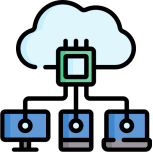
1. Cloud Computing
Cloud platforms provide scalable storage and processing power for IoT data.
- Data Storage: Stores large volumes of IoT data efficiently
- On-Demand Resources: Enables flexible computing power
2. Edge and Fog Computing
These technologies process data closer to the source to reduce latency.
- Low Latency: Faster processing near devices
- Reduced Bandwidth Usage: Less data sent to the cloud
3. Artificial Intelligence and Machine Learning
AI and ML analyze IoT data to generate intelligent insights and predictions.
- Pattern Recognition: Identifies trends in large datasets
- Automation: Enables smart decision-making systems
4. Data Analytics Tools
Advanced analytics tools help process and visualize IoT-generated data.
- Data Visualization: Graphs and dashboards for insights
- Predictive Analysis: Forecast future outcomes
Benefits of Big Data and IoT Integration
The integration of Big Data and IoT provides significant advantages across industries. The list of key benefits is given below:
1. Improved Decision Making
Organizations can make better decisions based on real-time data insights.
- Data-Driven Strategies: Reduce guesswork
- Accurate Forecasting: Better planning and execution
2. Enhanced Operational Efficiency
Automation and data analysis improve productivity and reduce costs.
- Process Optimization: Identify inefficiencies
- Resource Management: Better use of assets
3. Real-Time Monitoring and Control
IoT systems provide instant visibility into operations.
- Live Tracking: Monitor systems continuously
- Quick Response: Immediate action on issues
4. Predictive Maintenance
Big Data helps predict failures before they occur.
- Reduced Downtime: Prevent system failures
- Cost Savings: Avoid expensive repairs
5. Better Customer Experience
Businesses can deliver personalized and improved services.
- Customized Services: Based on user behavior
- Faster Response: Real-time customer support
Challenges in Big Data and IoT Integration
Despite its benefits, integrating Big Data with IoT presents several challenges. The list of challenges is given below:
1. Data Security and Privacy
Protecting sensitive data from cyber threats is a major concern.
- Data Encryption: Secure data transmission
- Access Control: Restrict unauthorized access
2. Data Management Complexity
Handling large volumes of diverse data is difficult.
- Data Storage Issues: Managing huge datasets
- Data Processing: Requires powerful systems
3. High Infrastructure Costs
Setting up IoT and Big Data systems requires significant investment.
- Hardware Costs: Sensors, servers, and devices
- Maintenance Costs: Ongoing system management
4. Interoperability Issues
Different IoT devices and platforms may not work together easily.
- Standardization Problems: Lack of common protocols
- Integration Complexity: Connecting multiple systems
Real-World Applications of Big Data and IoT Integration
Big Data and IoT integration is widely used in various industries. The list of real-world applications is given below:
1. Smart Cities
IoT and Big Data improve urban infrastructure and services.
- Traffic Management: Optimize traffic flow
- Energy Management: Reduce energy consumption
2. Healthcare Systems
Connected devices monitor patient health and provide insights.
- Remote Monitoring: Track patient conditions
- Predictive Diagnosis: Early detection of diseases
3. Industrial IoT (IIoT)
Manufacturing industries use IoT and Big Data for efficiency.
- Machine Monitoring: Track performance
- Quality Control: Improve product quality
4. Agriculture and Smart Farming
Farmers use IoT data to improve crop production.
- Soil Monitoring: Analyze soil conditions
- Weather Prediction: Optimize farming decisions
5. Retail and E-commerce
Businesses use data to enhance customer experience and sales.
- Customer Behavior Analysis: Understand preferences
- Inventory Management: Optimize stock levels
Comparison: Big Data vs IoT
| Feature | Big Data | IoT |
|---|---|---|
| Definition | Large datasets for analysis | Network of connected devices |
| Function | Data processing and insights | Data generation |
| Role | Analyze and store data | Collect and transmit data |
| Technologies Used | Analytics tools, AI, cloud | Sensors, networks, devices |
| Output | Insights and predictions | Raw data |
Future Trends of Big Data and IoT Integration
The future of Big Data and IoT integration looks promising with rapid technological advancements. The list of future trends is given below:
1. Integration with Artificial Intelligence
AI will enhance data analysis and automation in IoT systems.
- Smart Automation: Self-learning systems
- Advanced Predictions: Accurate forecasting
2. Growth of Edge Computing
More data will be processed at the edge for faster responses.
- Reduced Latency: Faster data processing
- Improved Performance: Efficient systems
3. Increased Use of 5G Technology
5G networks will improve connectivity and data transfer speed.
- High-Speed Communication: Faster data exchange
- Massive Device Connectivity: Support billions of devices
4. Enhanced Security Solutions
Advanced security technologies will protect IoT data.
- Blockchain Security: Secure data sharing
- AI-Based Security: Detect threats automatically
Conclusion
The integration of Big Data and IoT is revolutionizing how data is generated, processed, and utilized in modern systems. It enables smarter decision-making, improved efficiency, and innovative applications across industries.
As technologies continue to evolve, the combination of Big Data and IoT will play a crucial role in shaping the future of digital transformation, making systems more intelligent, connected, and efficient.