





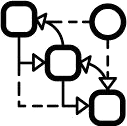







Communication Between Devices in IoT
Communication between devices in IoT is the backbone that enables smart systems to share data, make decisions, and perform automated actions. Understanding how devices communicate helps students learn how IoT systems work efficiently in real-world environments.
What is Communication in IoT?
Communication in IoT refers to the process through which devices exchange data over networks to perform tasks and deliver services. It ensures seamless interaction between sensors, devices, and cloud platforms, enabling real-time decision-making.
The list of key aspects of IoT communication is given below:
1. Data Exchange Between Devices
This involves transferring information from one IoT device to another or to a central system. Devices send data such as temperature, motion, or location to be processed and analyzed.
- Sensor Data Sharing: Sensors collect environmental data and transmit it to other devices.
- Real-Time Updates: Devices continuously send updated information for accurate monitoring.
- Bidirectional Communication: Devices can both send and receive data for interaction.
2. Connectivity Through Networks
IoT devices rely on different network technologies to stay connected and communicate effectively.
- Wireless Communication: Uses Wi-Fi, Bluetooth, or cellular networks.
- Wired Communication: Uses Ethernet or serial connections for stable data transfer.
- Internet-Based Communication: Devices connect via the internet to communicate globally.
3. Machine-to-Machine (M2M) Communication
M2M communication allows devices to interact directly without human intervention.
- Automation: Devices automatically perform actions based on data.
- Efficiency: Reduces manual effort and improves system performance.
- Smart Decisions: Devices make decisions based on predefined rules.
Types of Communication Models in IoT
IoT communication models define how devices interact and share data within a system. These models help in designing scalable and efficient IoT architectures.
The list of IoT communication models is given below:
1. Device-to-Device (D2D) Communication
This model allows direct communication between IoT devices without using a central server.
- Direct Interaction: Devices communicate using protocols like Bluetooth or Zigbee.
- Low Latency: Faster communication due to no intermediate system.
- Example: Smart lights controlled directly by a smartphone.
2. Device-to-Cloud Communication
In this model, devices send data directly to cloud platforms for processing and storage.
- Centralized Control: Cloud manages data and device operations.
- Remote Access: Users can access data from anywhere.
- Example: Smart home systems connected to cloud dashboards.
3. Device-to-Gateway Communication
Devices communicate through an intermediary gateway before reaching the cloud.
- Protocol Translation: Gateway converts data into compatible formats.
- Security Layer: Adds protection before sending data to cloud.
- Example: IoT sensors connected to a local hub.
4. Back-End Data Sharing Model
This model allows sharing of data between different cloud services and applications.
- Data Integration: Combines data from multiple IoT systems.
- Advanced Analytics: Enables deeper insights using big data tools.
- Example: Healthcare systems sharing patient data across platforms.
IoT Communication Protocols
IoT protocols define the rules and standards for data transmission between devices. These protocols ensure reliable, secure, and efficient communication in IoT systems.
The list of commonly used IoT communication protocols is given below:
1. MQTT (Message Queuing Telemetry Transport)
MQTT is a lightweight protocol designed for low-bandwidth and low-power devices.
- Publish/Subscribe Model: Devices publish data to topics and subscribers receive it.
- Low Power Consumption: Ideal for battery-operated devices.
- Reliable Messaging: Ensures message delivery even in unstable networks.
2. HTTP/HTTPS Protocol
HTTP is widely used for communication between devices and web servers.
- Request-Response Model: Devices send requests and receive responses.
- Easy Integration: Works well with web applications.
- Secure Communication: HTTPS adds encryption for safety.
3. CoAP (Constrained Application Protocol)
CoAP is designed for resource-constrained IoT devices.
- Lightweight Protocol: Uses less bandwidth and processing power.
- UDP-Based Communication: Faster than TCP-based protocols.
- Efficient for Sensors: Ideal for simple IoT devices.
4. AMQP (Advanced Message Queuing Protocol)
AMQP is used for reliable communication in enterprise-level IoT systems.
- Message-Oriented: Supports secure message queuing.
- High Reliability: Ensures data delivery with minimal loss.
- Scalable Systems: Suitable for large-scale applications.
Communication Technologies Used in IoT
Different technologies enable IoT devices to communicate depending on range, power, and application requirements. These technologies help build flexible and scalable IoT systems.
The list of IoT communication technologies is given below:
1. Wi-Fi Communication
Wi-Fi provides high-speed internet connectivity for IoT devices.
- High Data Rate: Supports large data transfers.
- Wide Usage: Common in homes and offices.
- Power Consumption: Requires more energy compared to other technologies.
2. Bluetooth and BLE
Bluetooth Low Energy (BLE) is optimized for short-range communication.
- Low Power Usage: Ideal for wearable devices.
- Short Range: Works within limited distance.
- Fast Pairing: Quick connection between devices.
3. Zigbee and Z-Wave
These are low-power wireless technologies used in smart home systems.
- Mesh Networking: Devices relay data to extend range.
- Energy Efficient: Suitable for battery-operated devices.
- Reliable Communication: Works well in connected environments.
4. Cellular Networks (3G, 4G, 5G)
Cellular networks enable long-range communication across large areas.
- Wide Coverage: Works in remote locations.
- High Speed: 5G supports ultra-fast data transfer.
- Scalability: Supports millions of connected devices.
Factors Affecting IoT Communication
Several factors influence the performance and reliability of communication between IoT devices. Understanding these factors helps in designing efficient systems.
The list of factors affecting IoT communication is given below:
1. Bandwidth and Data Rate
Bandwidth determines how much data can be transmitted over a network.
- High Bandwidth: Supports large data transmission.
- Low Bandwidth: Suitable for simple sensor data.
- Network Efficiency: Affects overall system performance.
2. Latency
Latency is the time taken for data to travel from source to destination.
- Low Latency: Required for real-time applications.
- High Latency: Can delay system responses.
- Critical Systems: Important for healthcare and automation.
3. Power Consumption
IoT devices often run on batteries, so energy efficiency is critical.
- Low Power Protocols: Extend device lifespan.
- Energy Optimization: Reduces maintenance costs.
- Efficient Communication: Minimizes power usage.
4. Security and Privacy
Security ensures safe communication between devices.
- Data Encryption: Protects sensitive information.
- Authentication: Verifies device identity.
- Secure Protocols: Prevent unauthorized access.
Challenges in IoT Device Communication
IoT communication faces several challenges that impact system performance and reliability. Addressing these challenges is essential for building robust IoT solutions.
The list of IoT communication challenges is given below:
1. Interoperability Issues
Different devices and protocols may not work together seamlessly.
- Standardization Problems: Lack of universal standards.
- Compatibility Issues: Devices from different vendors may conflict.
- Integration Complexity: Difficult to connect diverse systems.
2. Network Congestion
Large numbers of devices can overload networks.
- Data Traffic: High volume of data transmission.
- Performance Degradation: Slower communication speed.
- Scalability Issues: Difficult to manage growing devices.
3. Security Risks
IoT systems are vulnerable to cyber threats.
- Data Breaches: Unauthorized access to data.
- Device Hacking: Compromised devices can disrupt systems.
- Weak Encryption: Increases vulnerability.
4. Limited Resources
Many IoT devices have limited processing power and memory.
- Low Computing Power: Restricts complex operations.
- Memory Constraints: Limits data storage capacity.
- Efficient Design Needed: Requires optimized communication methods.
Comparison of IoT Communication Models
| Communication Model | Description | Advantages | Limitations |
|---|---|---|---|
| Device-to-Device | Direct communication between devices | Low latency, fast response | Limited scalability |
| Device-to-Cloud | Devices connect directly to cloud | Centralized control | Requires internet |
| Device-to-Gateway | Uses gateway as intermediary | Improved security | Additional hardware needed |
| Back-End Data Sharing | Cloud-to-cloud data sharing | Advanced analytics | Complex integration |
Real-World Example of IoT Communication
A smart home system demonstrates how IoT devices communicate effectively. Sensors detect motion, send data to a central hub, and trigger actions like turning on lights or sending alerts to a smartphone.
- Step 1: Motion sensor detects movement.
- Step 2: Data is sent via Wi-Fi or Zigbee.
- Step 3: Gateway or cloud processes the data.
- Step 4: Action is triggered (lights ON or notification sent).
This example shows how communication between IoT devices enables automation, efficiency, and real-time control in everyday life.