
ER Model in DBMS
The ER Model in DBMS (Entity Relationship Model) is a high-level conceptual data model used to define and design the structure of a database. It visually represents the entities, attributes, and relationships among data elements, making database design easier and more systematic.
The ER Model was introduced by Peter Chen in 1976 and is widely used in database design before converting data into relational tables.
What is ER Model in DBMS?
The Entity Relationship (ER) Model describes real-world objects and how they interact within a database system. It acts as a blueprint for creating databases by representing data in the form of ER diagrams.
Key Features of ER Model
-
Easy to understand and visualize
-
Reduces data redundancy
-
Improves database structure
-
Used in the conceptual design phase
-
Independent of any DBMS
Components of ER Model in DBMS
1. Entity
An entity is a real-world object that can be uniquely identified.
Examples:
-
Student
-
Employee
-
Customer
Types of Entities:
-
Strong Entity: Has a primary key (e.g., Student)
-
Weak Entity: Depends on a strong entity (e.g., Dependent)
2. Attributes
Attributes describe the properties of an entity.
Types of Attributes:
-
Simple Attribute: Cannot be divided (e.g., Age)
-
Composite Attribute: Can be divided (e.g., Name → First Name, Last Name)
-
Single-valued Attribute: One value (e.g., Roll Number)
-
Multi-valued Attribute: Multiple values (e.g., Phone Numbers)
-
Derived Attribute: Calculated (e.g., Age from Date of Birth)
-
Key Attribute: Uniquely identifies an entity (e.g., Student_ID)
3. Relationship
A relationship defines how two or more entities are connected.
Examples:
-
Student enrolls in Course
-
Employee works for Company
Types of Relationships:
-
One-to-One (1:1)
-
One-to-Many (1:M)
-
Many-to-Many (M:N)
4. Cardinality
Cardinality specifies the number of entities involved in a relationship.
Examples:
-
One student enrolls in many courses
-
One department has many employees
5. Participation Constraint
-
Total Participation: Every entity participates
-
Partial Participation: Some entities participate
ER Diagram Symbols
| Symbol | Meaning |
|---|---|
| Rectangle | Entity |
| Double Rectangle | Weak Entity |
| Oval | Attribute |
| Double Oval | Multivalued Attribute |
| Diamond | Relationship |
| Underlined Attribute | Primary Key |
ER Model in DBMS Examples
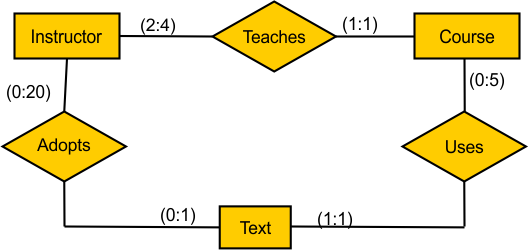
Example 01: Instructor Course Relationship
- Entity:Instructor,Course,Text
- Relationship:Teaches,Adopts,Uses
Example 02:Student Instructor Realtionship
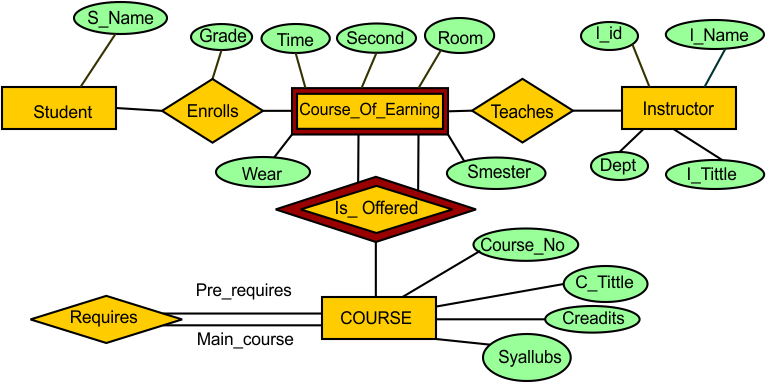
- Entity:Student,S_Name,Instructor,I_Id,I_Name,,I_Tittle,Dept,Course,Course_No,C_Tittle,Creadits,Syallubs
- Weak Entity:Course_Of_Earning,Time,Second,Room,Wear,Smester
- Realtionship:Enrolls,Grade,Teaches,Requires
- Weak Realtionship:Is_Offered
- Student Entity Attributes: S_Name
- Instructor Entity Attributes:I_Id,I_Name,,I_Tittle,Dept
- Course Entity Attributes:Course_No,C_Tittle,Creadits,Syallubs
- Course_Of_Earning Weak Entity Attributes:Time,Second,Room,Wear,Smester
- Enrolls Realtionship Attributes:Grade
Example 03:
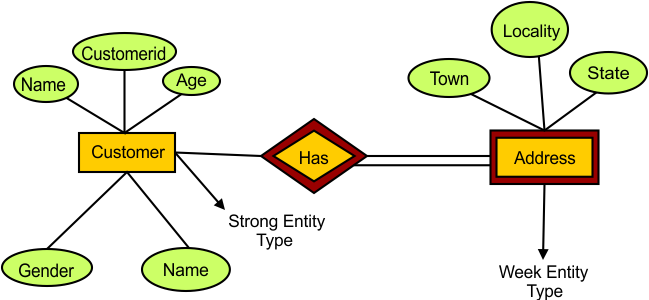
- Entity:Customer,Name,Customized,Age,Gender,Name
- Weak Entity:Address,Town,Locality,State
- Weak Relationship:Has
- Customer Entity Attributes:Name,Customized,Age,Gender,Name
- Address Weak Entity Attributes:Town,Locality,State
Example 04:
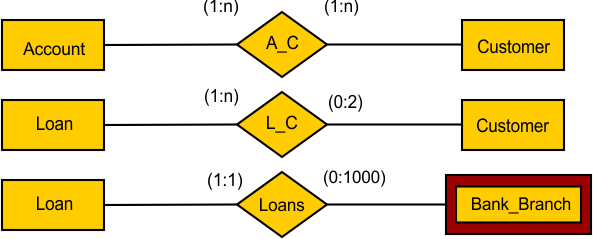
- Entity:Account,Customer,Loan,
- Weak Entity:Bank_Branch
- Relationship:A_C,L_C,Loans
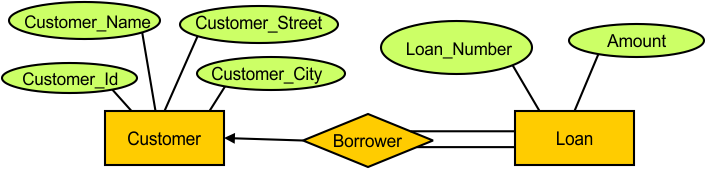
Example 05:Customer Loan Relationship
- Entity:Customer,Customer_Name,Customer_Street,Customer _Id,Customer_City,Loan,Loan_Number,Amount
- Relationship:Borrower
- Customer Entity Attributes:Customer_Name,Customer_Street,Customer _Id,Customer_City
- Loan Entity Attributes:Loan_Number,Amount
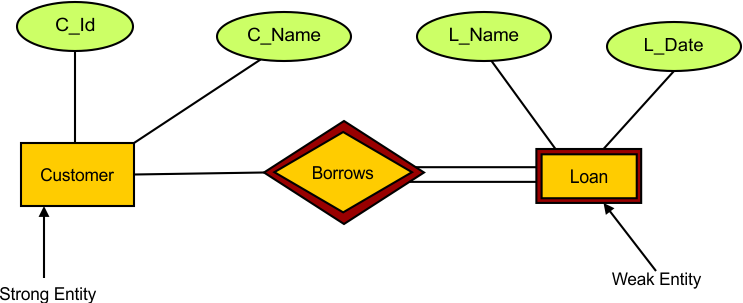
Example 06
- Entity:Customer,C_Id,C_Name
- Weak Entity:Loan,L_Name,L_Date
- Weak Relationship:Borrows
- Customer Entity Attributes:C_Id,C_Name
- Loan Weak Entity Attributes:L_Name,L_Date
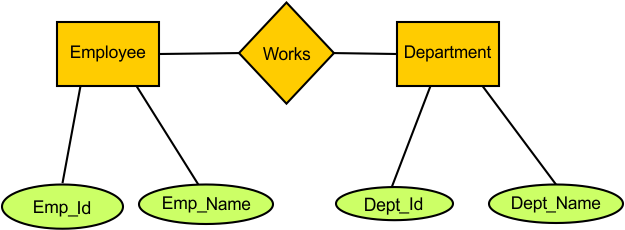
Example 07:Employee Department Relationship
- Entity:Employee,Emp_Id,Emp_Name,Department,Dept_Id,Dept_Name
- Relationship:Works
- Employee Entity Attributes:Emp_Id,Emp_Name
- Department Entity Attributes:Dept_Id,Dept_Name
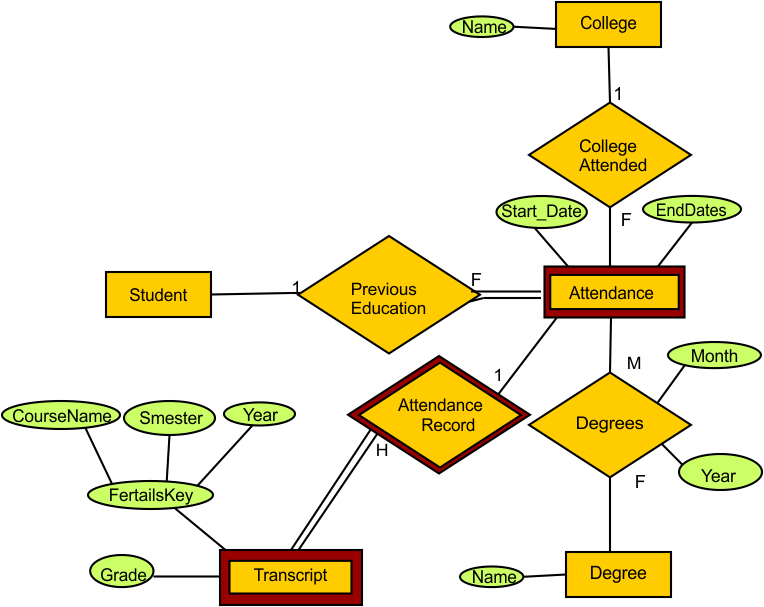
Example 08
- Entity:Student,College,Name,Degree,Name
- Weak Entity:Attendance,Start_Date,End_Dates,Transcript,Grade,FeartailsKey,Course, Name,Smester,Year
- Relationship:Previous Education,College Attended,Degrees,Month,Year
- Weak Relationship:Attendance Record
- College Entity Attributes:Name
- Degree Entity Attributes:Name
- Attendance Weak Entity Attributes:Start_Date,End_Dates
- Transcript Weak Entity Attributes:Grade,FeartailsKey,Course, Name,Smester,Year
- Degrees Relationship Attributes:Month,Year
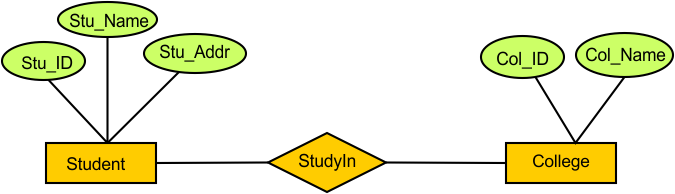
Example 09:Student College Relationship
- Entity:Student,Stu_ID,,Stu_Name,,Stu_Addr,College,Col_ID,Col_Name
- Relationship:StudyIn
- Student Entity Attributes:Stu_ID,Stu_Name,,Stu_Addr
- College Entity Attributes:Col_ID,Col_Name
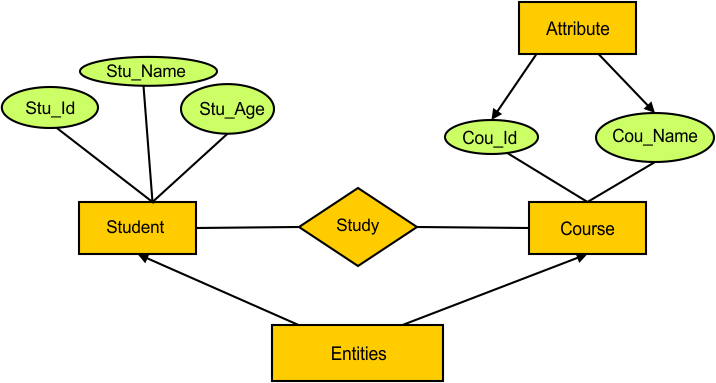
Example 10:Student Course Relationship
- Entity:Entities,Student,Stu_Id,Stu_Name,Stu_Age,Attribute,Cou_Id,Cou_Name,Course
- Relationship:Study
- Student Entity Attributes:Stu_Id,Stu_Name,Stu_Age
- Course Entity Attributes:Cou_Id,Cou_Name
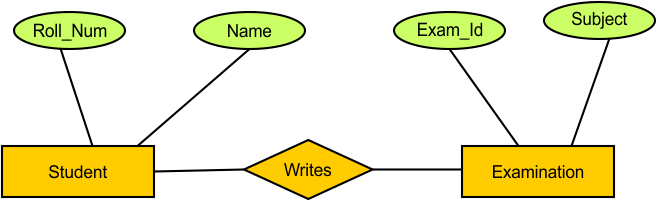
Example 11:Student Exam Relationship
- Entity:Student,Roll_Num,Name,Examination,Exam_Id,Subject
- Relationship:Writes
- Student Entity Attributes:Roll_Num,Name
- Examination Entity Attributes:Exam_Id,Subject
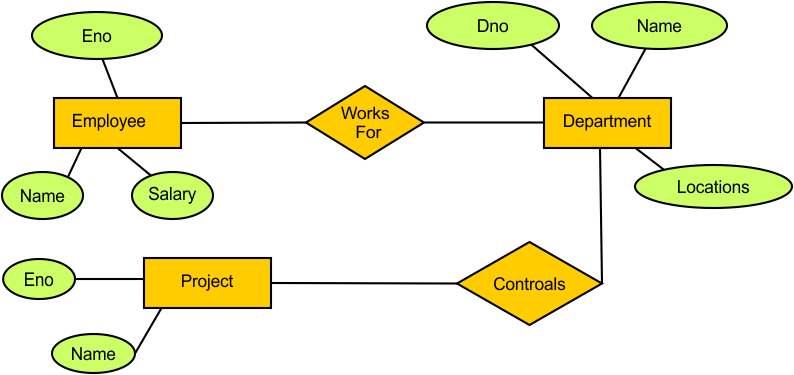
Example 12:Employee Department Relationship
- Entity:Employee,Eno,Name,Salary,Department,Dno,Name,Locations,Project,Name,Eno
- Relationship:Works For,Controals
- Employee Entity Attributes:Eno,Name,Salary
- Department Entity Attributes:Dno,Name,Locations
- Project Entity Attributes:Name,Eno
Example 13
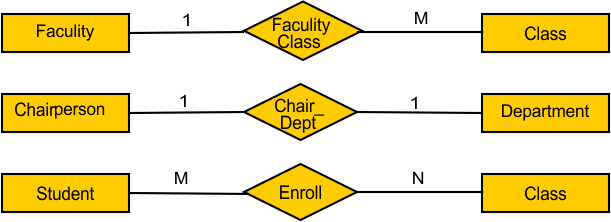
- Entity:Faculity,Class,Chairperson,Department,Student,Class
- Relationship:Faculity Class,Chair_Dept,Enroll
Example 14
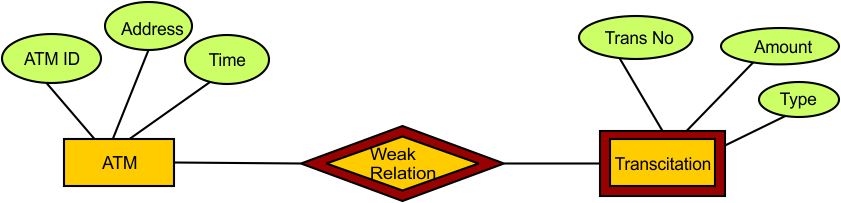
- Entity:ATM,ATM ID,Address,time
- Weak Entity:Transcitation,Trans No,Amount,Type
- Relationship:Weak Relation
- ATM Entity Attributes:ATM ID,Address,time
- Transcitation Weak Entity Attributes:Trans No,Amount,Type
Example 15
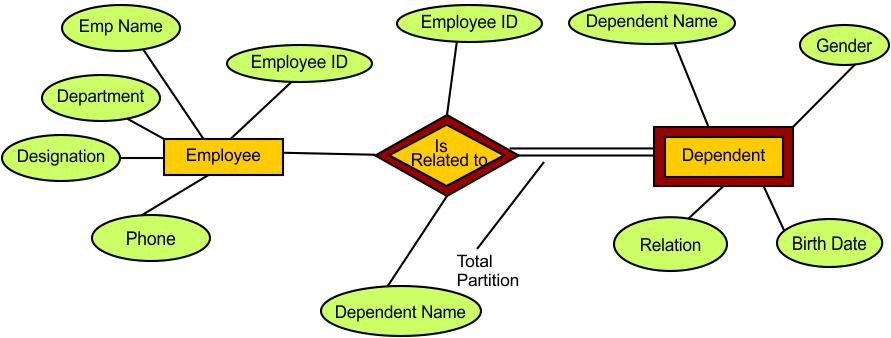
- Entity:Employee,Employee ID,Employee Name,Department,Designation,Phone
- Weak Entity:Dependent,Dependent Name,Gender,Relation,Birth Date
- Weak Relationship:Is Related to,Employee ID,Dependent Name
- Employee Entity Attributes:Employee ID,Employee Name,Department,Designation,Phone
- Dependent Weak Entity Attributes:Dependent Name,Gender,Relation,Birth Date
- Is Related to Weak Relationship Attributes:Employee ID,Dependent Name
Example 16:Loan Payment Relationship
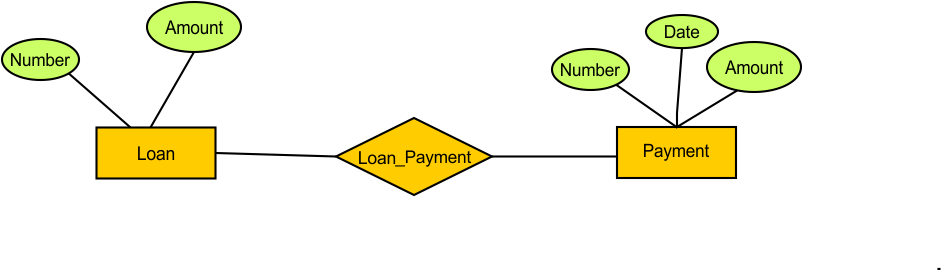
- Entity:Loan,Number,Amount,Payment,Number,Date,Amount
- Relationship:Loan_Payment
- Loan Entity Attributes:Number,Amount
- Payment Entity Attributes:Number,Date,Amount
Example 17
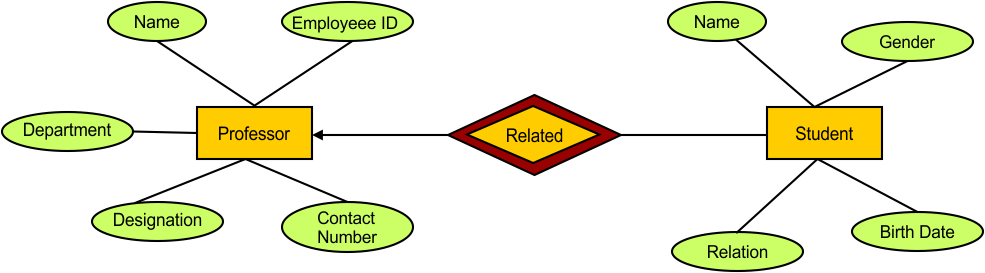
- Entity:Professor,Department,Name,Employee ID,Designation,Contact Number,Student,Name,Gender,Relation,Birth Date
- Weak Relationship:Related
- Professor Entity Attributes:Department,Name,Employee ID,Designation,Contact Number
- Student Entity Attributes:Name,Gender,Relation,Birth Date
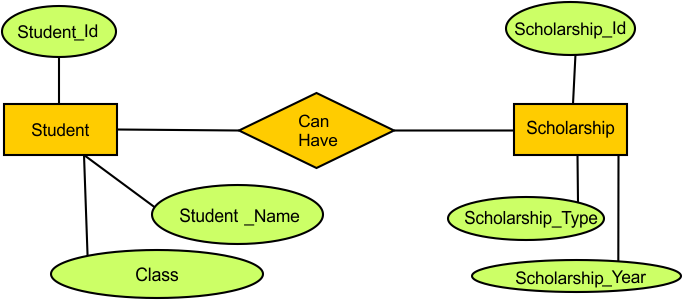
Example 18:Student Scholarship Relationship
- Entity:Student,Student,_Id,Student_Name,Class,Scholarship,Scholarship_Id,Scholarship_Type,Scholarship_Year
- Relationship:Can Have
- Student Entity Attributes:Student,_Id,Student_Name,Class
- Scholarship Entity Attributes:Scholarship_Id,Scholarship_Type,Scholarship_Year
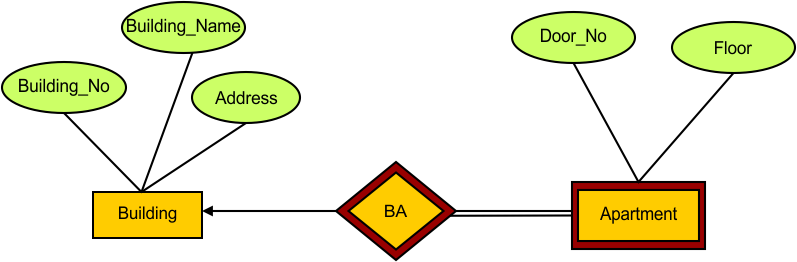
Example 19
- Entity:Building,Building_No,Building_Name,Address
- Weak Entity:Apartment,Door_No,Floor
- Building Entity Attributes:Building_No,Building_Name,Address
- Apartment Weak Entity Attributes:Door_No,Floor
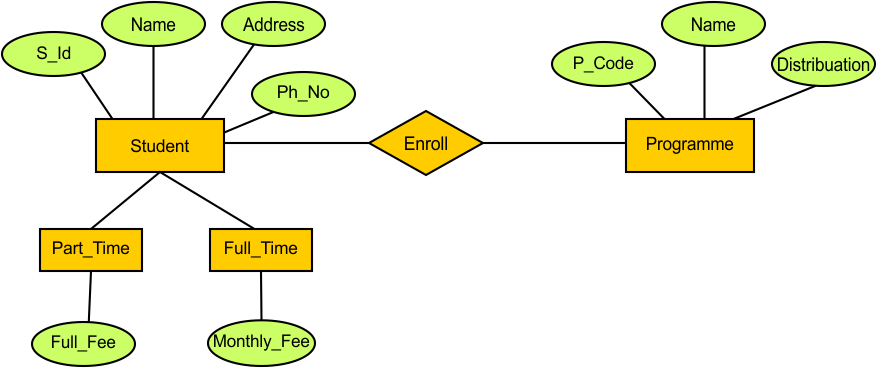
Example 20:Student Programme Relationship
- Entity:Student,S_Id,Name,Address,Ph_No,Part_Time,Full_Fee,Full_Time,Monthly_Fee,Progreamme,P_Code,Name,Distribuation
- Relationship:Enroll
- Student Entity:Part_Time,Full_Time
- Student Entity Attributes:S_Id,Name,Address,Ph_No
- Part_Time Entity Attributes:Full_Fee
- Full_Time Entity Attributes:Monthly_Fee
- Progreamme Entity Attributes:P_Code,Name,Distribuation
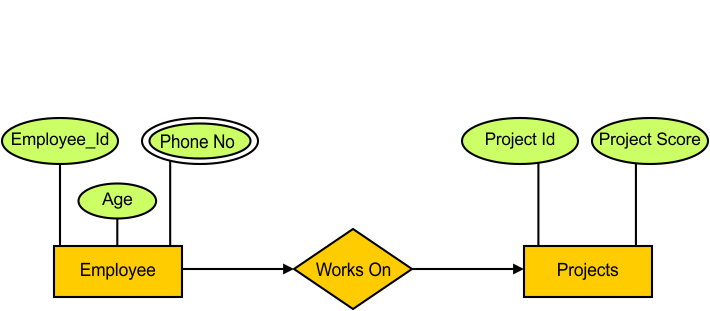
Example 21:Employee Projects Realationship
- Entity:Employee,Age,Employee_Id,Projects,Project Id,Project Score
- Weak Entity:Employee,Phone No
- Realationship:Works On
- Employee Entity Attributes:Age,Employee_Id
- Employee Weak Entity Attributes:Phone No
- Projects Entity Attributes:Project Id,Project Score
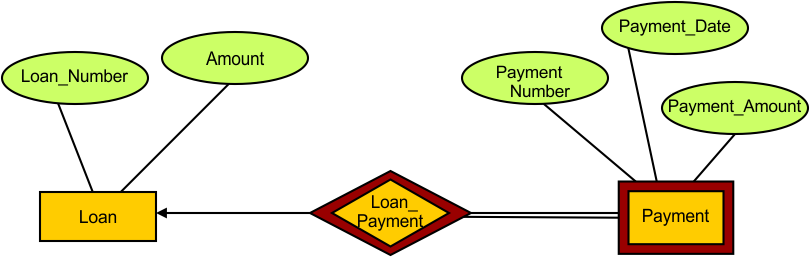
Example 22
- Entity:Loan,Loan_Number,Amount
- Weak Entity:Payment,Payment Number,Payment_Date,Payment_Amount
- Weak Relationship:Loan_Payment
- Loan Entity Attributes:Loan_Number,Amount
- Payment Weak Entity Attributes:Payment Number,Payment_Date,Payment_Amount
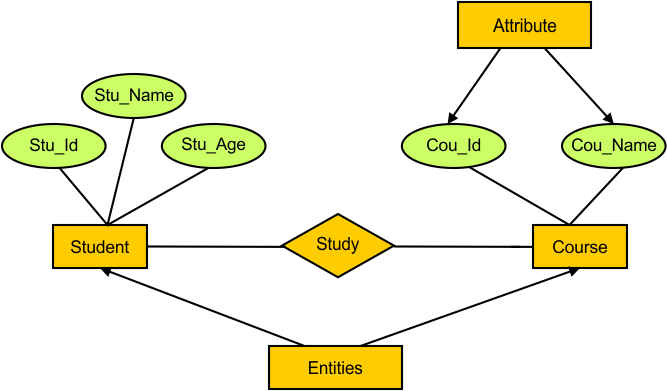
Example 23:Student Student Relationship
- Entity:Entities,Student,Stu_Id,Stu_Name,Stu_Age,Attribute,Cou_id,Cou_Name,c
- Relationship:Study
- Student Entity Attributes:Stu_Id,Stu_Name,Stu_Age
- Attribute Entity Attributes:Cou_id,Cou_Name
- Course Entity Attributes:Cou_id,Cou_Name
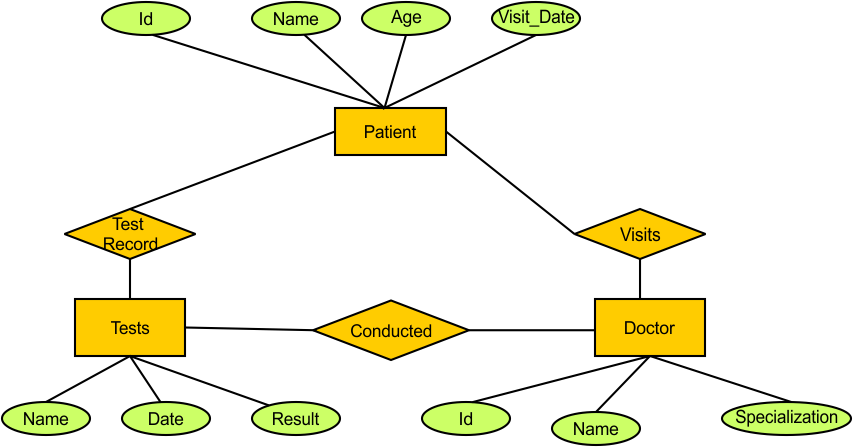
Example 24:Hospital ER Model
- Entity:Test,Name,Date,Result,Doctor,Id,Name,Specialization,Patient,Id,Name,Age,Visit_Date
- Relationship:Conducted,Vists
- Test Entity Attributes:Name,Date,Result
- Doctor Entity Attributes:Id,Name,Specialization
- Patient Entity Attributes:Id,Name,Age,Visit_Date
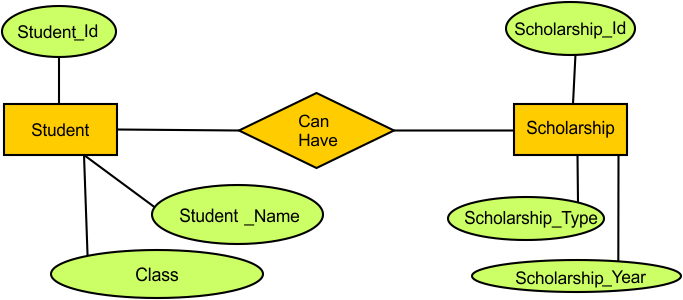
Example 25:Student Scholarship Relationship
- Entity:Student,:Student_Id,:Student_Name,Class,Scholarship,Scholarship_Id,Scholarship_Type,Scholarship_Year
- Relationship:Can Have
- Student Entity Attributes:Student_Id,:Student_Name,Class
- Scholarship Entity Attributes:Scholarship_Id,Scholarship_Type,Scholarship_Year
Example 26
Example 27
Advantages of ER Model in DBMS
-
Simple and easy to understand
-
Provides clear database structure
-
Reduces data inconsistency
-
Helps in effective database design
-
Supports normalization
Disadvantages of ER Model
-
Complex diagrams for large databases
-
Limited representation of constraints
-
Requires conversion to relational model
ER Model vs Relational Model
| ER Model | Relational Model |
|---|---|
| Conceptual design | Logical design |
| Graphical representation | Tabular representation |
| Uses entities & relationships | Uses tables & keys |
Applications of ER Model
-
Database design
-
Software engineering
-
Business process modeling
-
Data analysis
-
Academic projects
Conclusion
The ER Model in DBMS is a fundamental concept for understanding database design. It provides a clear visualization of data and relationships, making it easier to create efficient and well-structured databases. Learning ER modeling is essential for students, database designers, and software developers.
Frequently Asked Questions (FAQs)
Q1. What is ER Model in DBMS?
The ER Model is a conceptual database model that represents entities, attributes, and relationships.
Q2. Who proposed the ER Model?
Peter Chen proposed the ER Model in 1976.
Q3. What is an ER Diagram?
An ER Diagram is a graphical representation of the ER Model.